



”Through the continuous and logical development of certain artistic ideas, Pančić has reached the borderline areas between drawing and sculpture, where it is difficult to define clear proportions…”
Saša Pančić (b. 1965) is a visual and fine artist. He graduated from the Faculty of Fine Arts, where in 1992 he also earned his master’s degree in the class of Dragan Lubarda, specializing in drawing. He is a member of ULUS (Association of Fine Artists of Serbia) and served as its president from 2007 to 2010. Since 1988, he has held the status of an independent artist. Pančić has held over twenty solo exhibitions both in Serbia and abroad, and his works are included in major museums, public and private collections, as well as in public spaces in Sofia (Bulgaria), Belgrade (Serbia), and Kakslauttanen (Finland). He lives and works in Belgrade.


On Pančić’s work:
Ješa Denegri
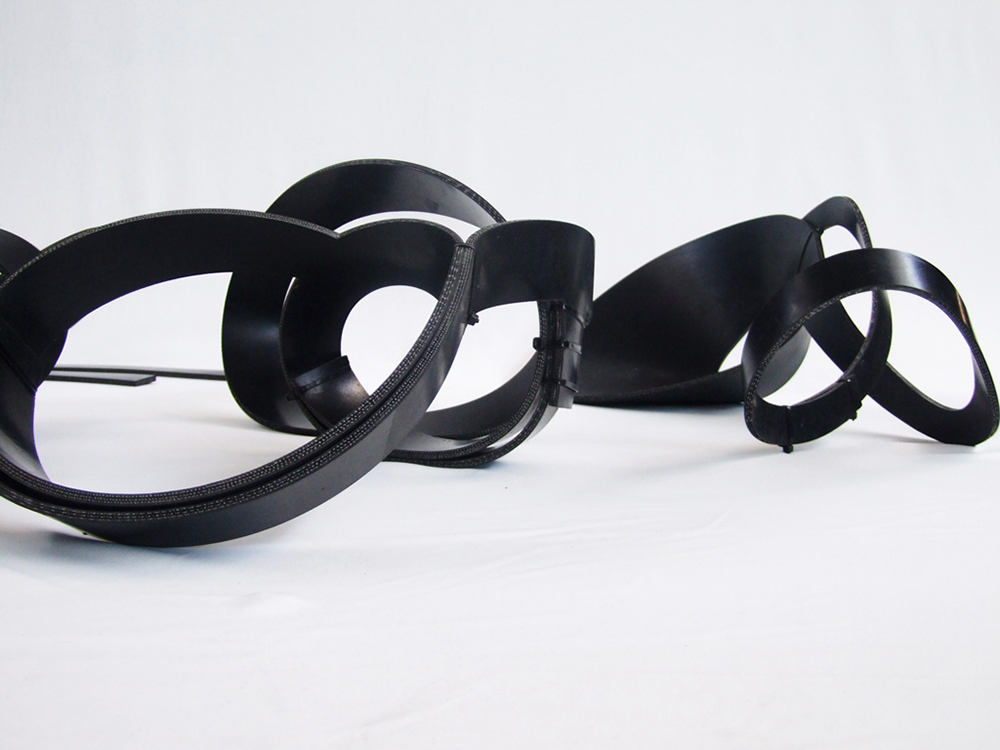
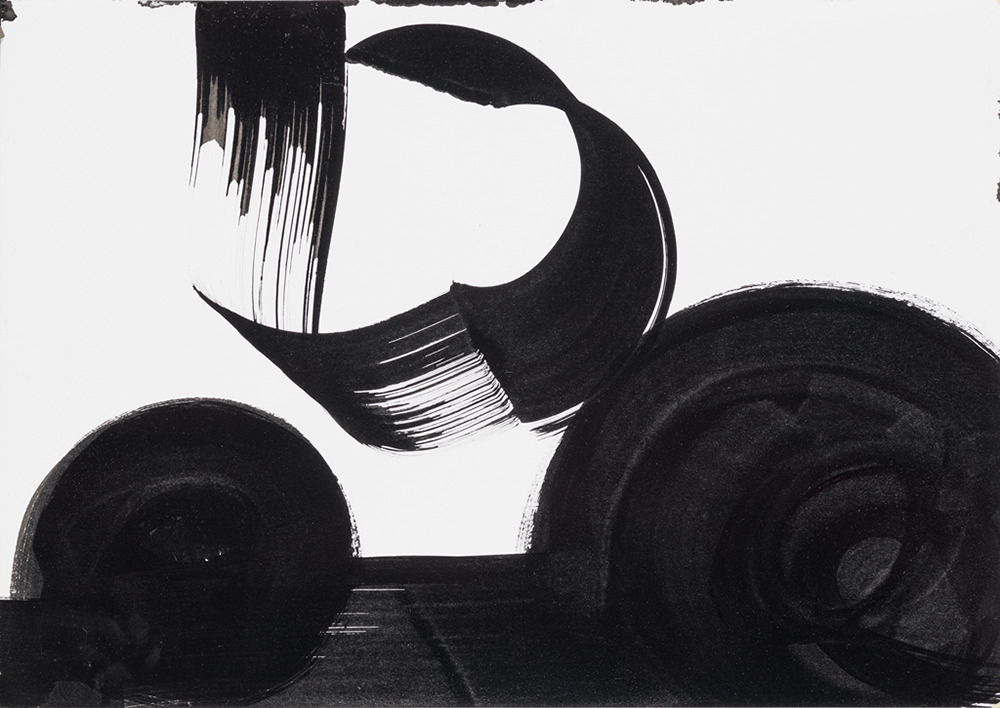
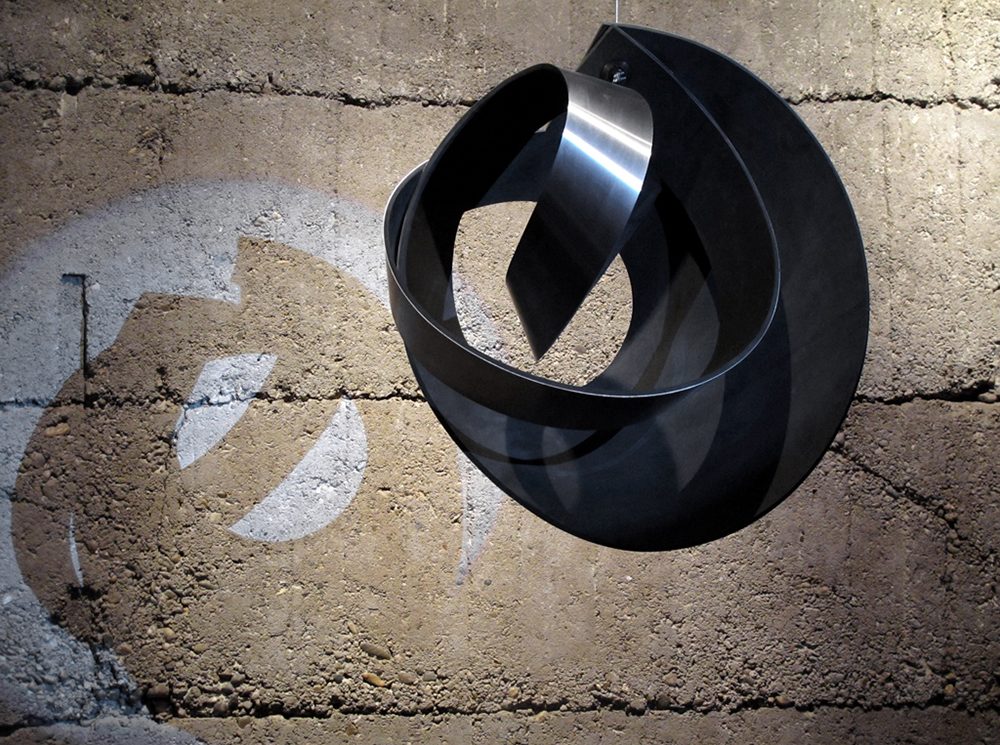
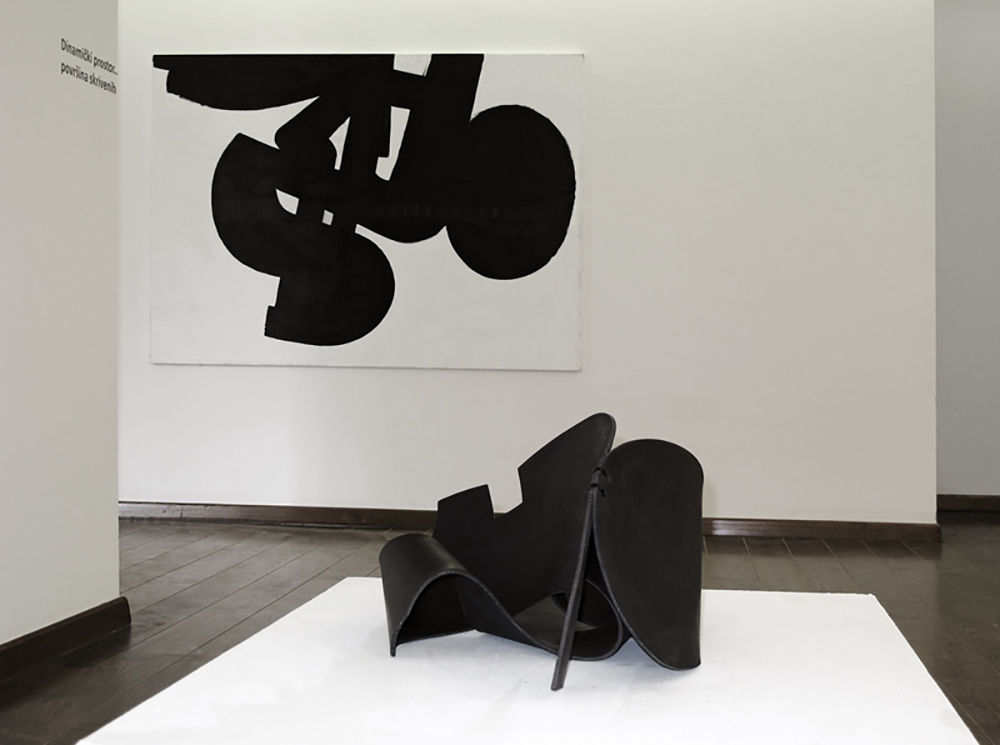
“…A clear and legible form based on the constancy of black-and-white contrast, a form that is not strictly geometric (not derived from the heritage of constructivism or minimalism), simultaneously a form of bent ‘hard edges’ (but not an organic form arising from the reduction of representational data) – these are the essential visible characteristics of Saša Pančić’s visual language, in works executed in materials such as paper, cardboard, wood, rubber, or metal, using processes of cutting, slicing, bending, with various tools, striving to move from the two-dimensional surface of a painting or drawing to a three-dimensional spatial position of a specific artistic object.”
Sava Stepanov
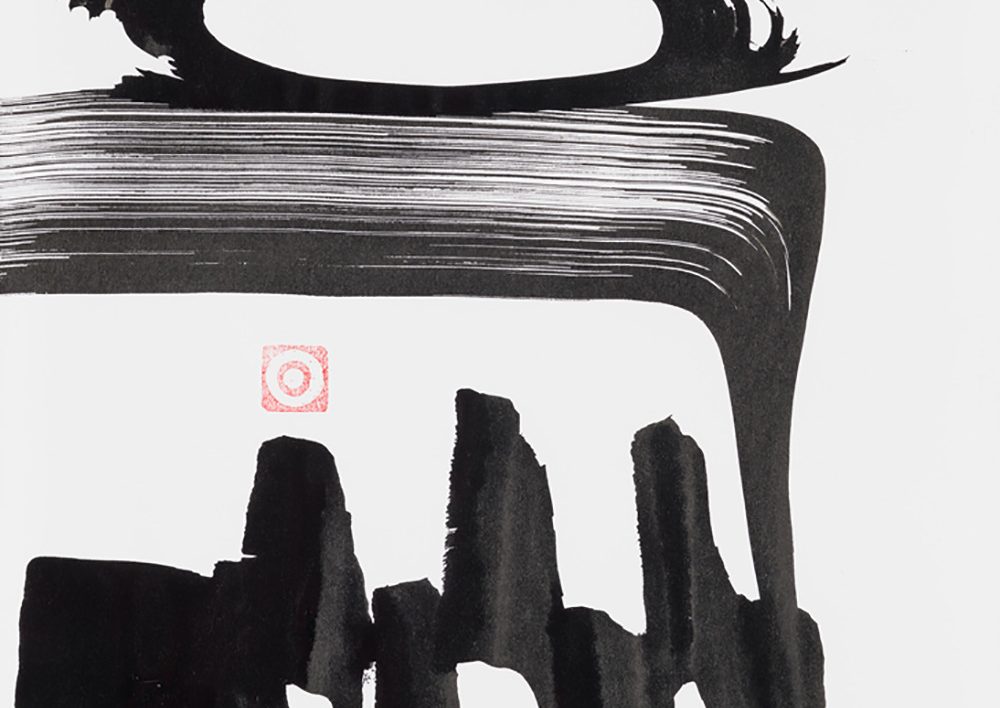
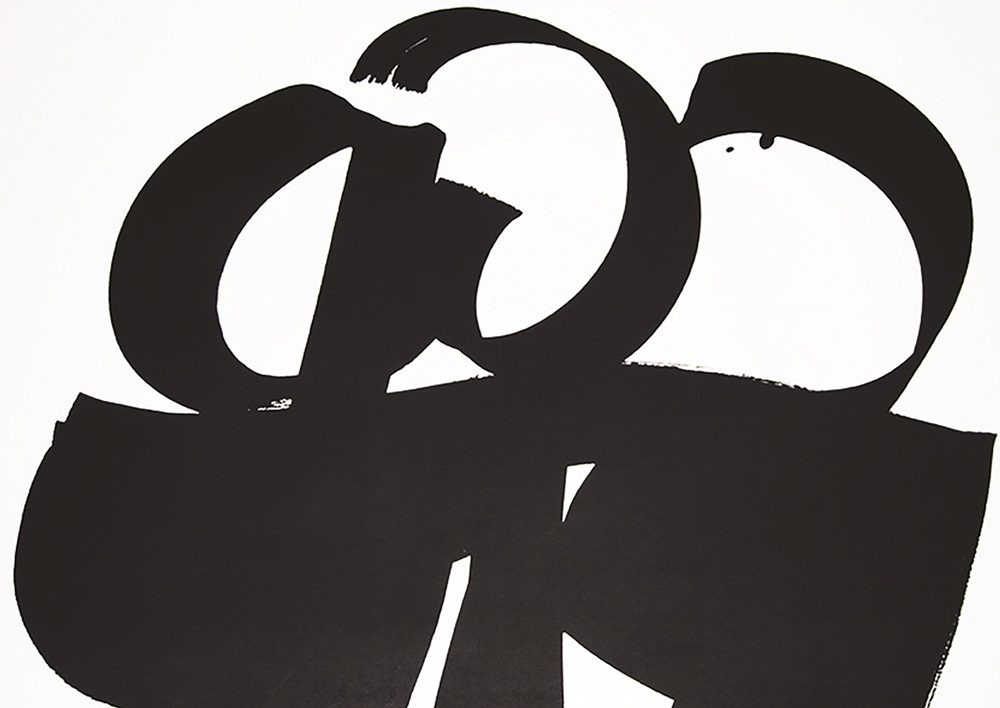
“…Through the continuous and logical development of certain visual ideas, Pančić has reached the borderline areas of drawing and sculpture, where it is difficult to determine the rules or proportions. This necessitates constant questioning and exploration, a space that respects the ontological character of artistic expression and offers numerous approaches for the artistic interpretation of reality… At the same time, thanks to his cultivated mode of visual expression, Pančić reaches interesting spiritual realms and values, as well as a distinctive expressiveness that persuasively conveys the authenticity of his drawing and sculptural poetics…”

Zoran Gavrić
“…In this dissolution of form, paradoxically, Saša Pančić gives a dominant role to the line. The line itself, however, as he says, he does not connect to what we know as contour, nor to gesture or the movement of the hand, but rather to his own breath. Thus, with this new dissolution—the abolition of the linear—the relationship of these surfaces shifts toward depth. ‘The line identified with one’s own being,’ says Saša Pančić, ‘loses the meaning of the horizon and assumes the role of a spatial center—inherent to the unity of two lights. The rhythm of mutual pulsation becomes an opening. While color “is,” the line “is” and “is not.”'”