The O3ONE space, at its various locations over the years—this being the seventh—has been primarily recognized as a gallery, but it is certainly much more than that. It is a place where a wide range of divergent initiatives intersect, spanning contemporary visual arts, music, comics, fashion, design, business and marketing, humanitarian work, and alternative education. It serves as a testing ground for continually rethinking exhibition formats and the processes of staging exhibitions and other types of cultural events. Various forms of collaboration and joint projects involving individual artists as well as formal and informal creative groups and teams—including those from the corporate and business sectors—have spontaneously emerged in this environment, transcending conventional boundaries between types of public engagement and the audiences that follow them. In the first three years alone, driven by strong founding enthusiasm, more than two hundred events were realized, sometimes several per day.
The first location of the O3ONE Project was at the former Yugoslav Gallery of Art, at Andrićev Venac 12. After a few years, it moved to Andrićev Venac 10, then to Uzun Mirkova 10—first at street level, then upstairs—later to Koče Popovića 9, then Gavrila Principa 16, and in the last four years it has been located at Dorćol Plac, Dobračina 59. In addition, O3ONE has constantly carried out visual and conceptual experiments on billboards, in collaboration with Alma Quatro, and other projects outside the gallery space, bringing the total number of realized events to two and a half thousand to date. These were largely not ephemeral events or incidental exhibitions meant to impress merely by quantity or variety; rather, they were often installations and processes pivotal to the careers of the artists who conceived and executed them. Evidence of this includes two “Vladislav Ribnikar” awards for visual arts, given by the newspaper Politika, for exhibitions produced at O3ONE: Predrag Nešković’s NEW DANDY in 2007 and Raša Todosijević’s Mali dnevnik III in 2009.
The first event within the O3ONE program, in September 2004, was a live musical performance featuring Zbigniew Karkowski, an experimental musician and composer of acoustic and electroacoustic music, and Helmut Schäfer, an artist from the demo music scene. It was realized in collaboration with the Činč initiative, the project Composer in the First Person, and the Multimedia Institute (MAMA) in Zagreb. This launched one of O3ONE’s program lines, focused on experimental music. Parallel to this was a program line dealing with the visual aspects of the image and identity of alternative music performers, initiated by Vuk Vidor with his ambient installation EKV Rewind. That first year, Mihael Milunović, with the exhibition Pod Če, which explored “the connection between guerrilla warfare principles and information networks, new social logic, and philosophy of resistance,” demonstrated how an iconic figure like Ernesto Che Guevara could be reimagined through artistic investigation and experimental installations to reclaim a potential for rebellion and resistance. Each new artist subsequently brought additional dimensions to O3ONE’s programming, often beyond the boundaries of their previous standard artistic practice, approaching exhibiting at O3ONE as a challenge to present something unusual and unexpected.
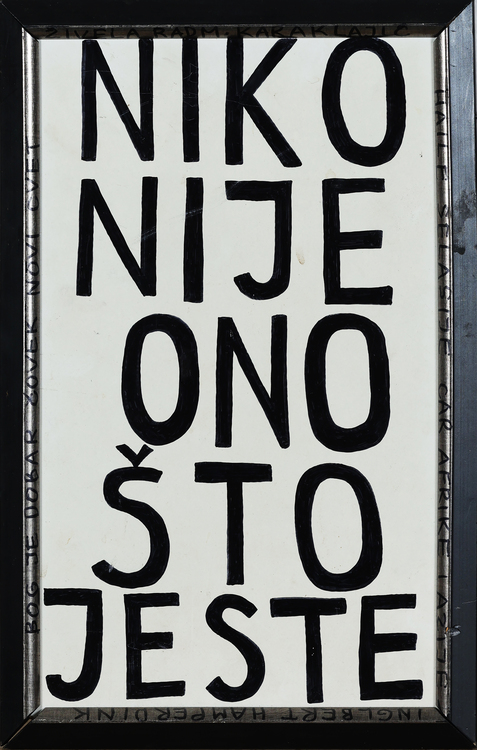
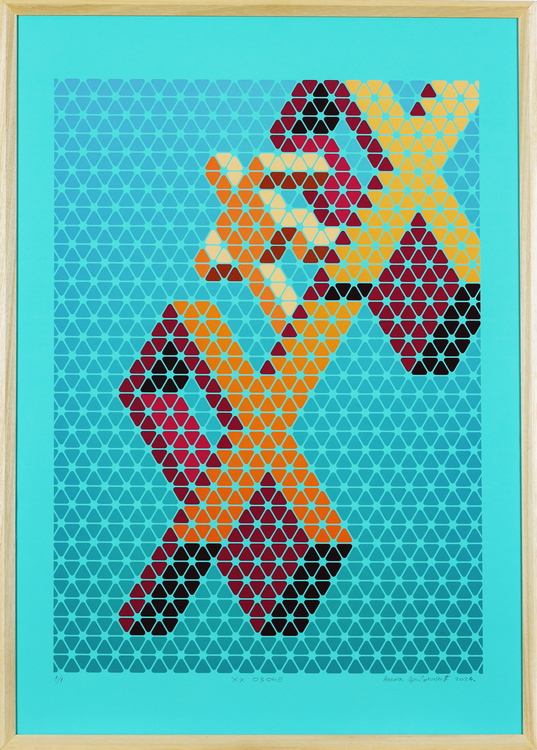
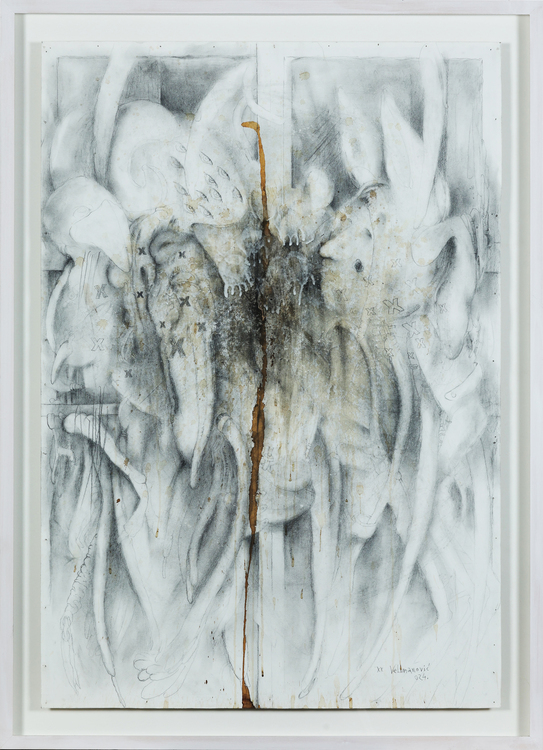
The continuity of the O3ONE Project is demonstrated by the fact that the aforementioned Peđa Nešković and Raša Todosijević, as well as Vuk Vidor and Mihael Milunović, are present with their works even in this ad hoc exhibition, a brief reminder that two full decades have passed since O3ONE was launched. Among other participants, many of whom have previously realized installations or individual works within the O3ONE Project multiple times, are other doyens of the visual arts, as well as the fashion, design, comic, and animation scenes, recognized by critics and the public for their distinctive styles, while also producing works appropriate for this specific space and context. Were we not so accustomed to their frequent exhibition presence, any exhibition including works by, for example, Uroš Ðurić, Aleksandar Zograf, and Slavimir Stojanović would in itself be considered a significant cultural event. However, in the O3ONE space, their works as part of an exhibition are entirely expected, as is their personal presence, whether as authors, guests, or participants in someone else’s artistic or humanitarian project. As long as such caliber of artists responds to O3ONE’s invitations—alongside numerous emerging artists who also find a place in O3ONE’s programming, as well as artists crossing from one cultural field to another—O3ONE’s position on the local, regional, and international scene will be secured.