


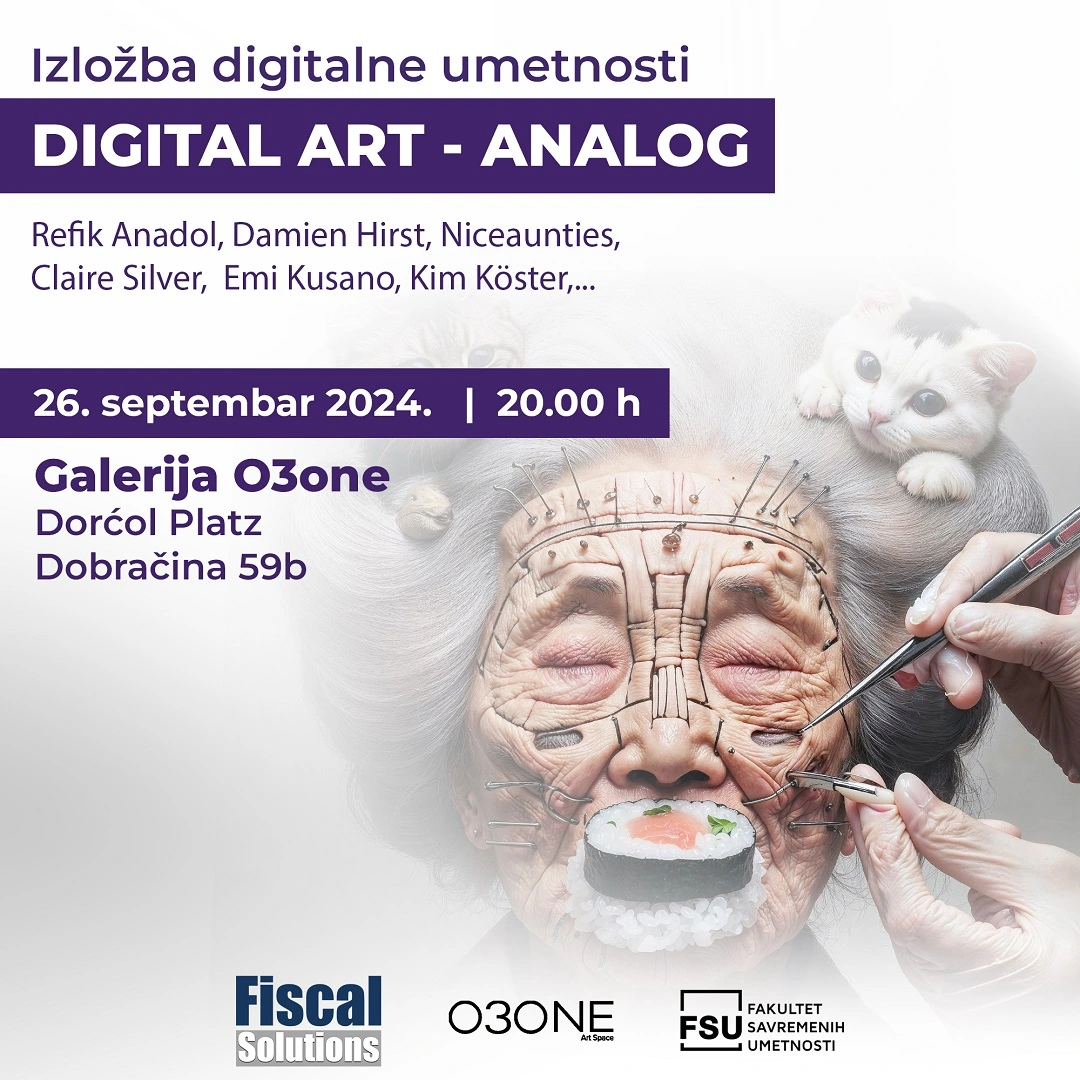
Introduction to the exhibition “DIGITAL ART – ANALOG”
Can art be created by artificial intelligence? Is generative art, created by algorithms, less valuable than that painted by the hand of an artist? Does digital art have a soul, or is it merely a reflection of technological progress without aesthetic or spiritual value?
These are questions that provoke strong reactions and heated debates in the art world today. Digital art is still contested, often seen as inferior to traditional, analog art. It is harder to present, requires a specific set of skills — understanding technology, software tools like Photoshop, and even artificial intelligence. However, at its core, the artistic expression of digital art is no less valid than that in the analog world. In fact, it not only complements but also enriches analog forms, offering new horizons for exploration and creation.
Goal of the Exhibition
Our exhibition, “DIGITAL ART – ANALOG”, aims to showcase digital art as equal and significant, with a unique place in the world of art. We wish to demystify and bring digital art closer to a wider audience, revealing its beauty, complexity, and potential to enrich our art experience. We believe that digital art is the future we must embrace.
An equally important goal is to inform the public about the current status of digital art. Museums, traditionally the custodians of art, are lagging behind the rapid development of digital forms. We cannot wait for digital art to find its place on museum walls, because by then it will already be outdated. Therefore, our mission is to present this art now, while it is still in its freshest and most provocative form.
Categories of the Exhibition
The exhibition covers several key categories of digital art, each with its own specifics:
-
Artificial Intelligence: This is one of the most controversial areas. The question posed is whether AI can be an artist or is simply a tool in the hands of a human creator? Works in this category spark discussions about the nature of authorship and creativity in the age of machines.
-
Generative Art: Creations made using algorithms and principles of randomness. While humans program the algorithm, the question remains whether this can be considered art when the process of creation is taken over by a machine. This category represents a completely new set of skills necessary for creation, where programming and art become one.
-
Digital Photography: This category shows the evolution of artistic expression from analog photography to digital, incorporating artificial intelligence and the creation of entirely new digital worlds.
-
Illustrations and Others: This group includes various forms of digital art that do not fall into the previous categories but are equally important for understanding the full spectrum of digital art.
Featured Artists
-
Refik Anadol: One of the most prominent contemporary artists using artificial intelligence and data to create dynamic and interactive artworks. His work ethic and innovation lead to fascinating visual experiences that merge technology, ecology, and art in a way never before seen in Serbia.
-
Tyler Hobbs: A pioneer of generative art, known for his works that explore complex structures through algorithms. His art is used as educational material in universities worldwide, which further emphasizes the importance of his contribution to this field.
-
Claire Silver: One of the first artists to explore the boundaries between artificial intelligence and artistic creation. Claire Silver’s works often provoke reflection on the role of AI in the creative process, raising questions about identity and creativity in the digital age.
Why Us?
Fiscal Solutions, as a company that constantly explores innovation and technological progress, sees a parallel between the development of the business world and art. Technological innovations enable economic growth, but equally important is the spiritual development of society. We believe that art should play a key role in this process, using technology as a tool for deeper connection with our humanity.
Through a partnership with the Faculty of Contemporary Arts in Belgrade, which recognizes the importance of digital art in educating new generations of artists, we aim to demonstrate that Serbia has the potential to become part of the global digital art trend. The “DIGITAL ART-ANALOG” exhibition brings works by artists such as Refik Anadol, Tyler Hobbs, Claire Silver, as well as Damien Hirst, Takashi Murakami, and many other equally interesting and important figures in the world of digital art.
Through this exhibition, we aim to encourage visitors to reconsider their views, embrace new forms of artistic expression, and prepare for a future in which digital art will occupy an equal, if not leading, position in the world of art.